
GLP-1 Agonist Sherman Oaks, CA
GLP-1 agonists are a class of medications used in blood-sugar control and chronic weight management. They work by mimicking a natural gut hormone that influences insulin release, digestion, and appetite. This page explains the class. The GLP-1-based therapy dispensed at Cosmetic Injectables Center Medspa is tirzepatide, prescribed and supervised by Dr. Sherly Soleiman, MD.
Several different molecules belong to this class, and they are not interchangeable; each has its own approved uses, dosing, and evidence base. Cardiovascular and kidney-related indications are held by specific approved products for specific patient groups; they are not properties of the class as a whole, and they are not claimed for the therapy offered here.

What are GLP-1 agonists?
GLP-1 agonists are medications that mimic the gastrointestinal hormone, Glucagon-like peptide 1. This hormone, GLP-1, is produced by the intestine and plays a role in blood glucose (sugar) control and appetite.
GLP-1 peptides have the following functions:
- Stimulate insulin release
- Slow down the digestion of food
- Reduces the sugar your liver makes
- It makes you feel full and not hungry

These medications are available as tablets and injections. They are also administered at different doses and last for different durations.
Molecules in and adjacent to this class include:
- Semaglutide: A GLP-1 receptor agonist, available as a weekly injection and as a daily tablet. Not currently dispensed at Cosmetic Injectables Center Medspa.
- Liraglutide: An earlier GLP-1 agonist, given as a daily rather than weekly injection.
- Exenatide: Among the first medications in the class, given twice daily or weekly depending on formulation.
- Dulaglutide: a weekly GLP-1 agonist used primarily for glycemic control.
-
Tirzepatide: A dual GIP/GLP-1 receptor agonist, acting on two gut-hormone receptors rather than one. This is the therapy offered at Cosmetic Injectables Center Medspa.
Each molecule is sold under one or more manufacturer brand names, and approved uses differ between products. We describe molecules rather than brands here because the brand a patient has heard of is often not the product being discussed. Our editorial guide, Tirzepatide vs Semaglutide, explains the difference in plain language.
These are prescription medications with a well-characterised side-effect profile, most commonly gastrointestinal. They require medical evaluation before starting, gradual dose escalation, and ongoing monitoring. Risks and contraindications are set out in the Side Effects & Risks section below.
GLP-1 agonist Benefits
Medications in this class have become a significant part of how type 2 diabetes and obesity are managed clinically. What follows describes what the class does and what the evidence supports.

What Results to Expect:
- Regulates Blood Sugar levels: GLP-1 agonists regulate blood sugar by increasing insulin secretion and reducing gluconeogenesis (creation of sugars by the body). With this, diabetes can be controlled. It remarkably reduces HbA1c levels (a blood test that averages 3 months of blood sugar levels).
-
Weight reduction: GLP-1 agonists slow digestion and increase the feeling of fullness, which for most patients reduces overall calorie intake. Results are strongest when combined with sustained changes to diet and physical activity.
-
Improvement in obesity-related health markers: Sustained weight reduction is generally associated with improvement in blood pressure, cholesterol, and blood-sugar measures. Specific cardiovascular risk-reduction indications are held by particular approved products for particular patient populations; no such benefit is claimed for the therapy offered here.
-
Under investigation: Researchers are studying possible effects of GLP-1 medications beyond blood sugar and weight, including inflammatory markers. These are areas of active research, not established or approved uses, and are not a reason we would recommend treatment.
-
Support for long-term maintenance: Because these medications act on appetite and satiety signalling rather than willpower alone, many patients find nutrition changes easier to sustain while on treatment. Building those habits during treatment is what supports maintenance afterwards.
How Long Will Results Last?
The results are seen when you’re on the medications. Proper use and lifestyle modification ensure the best results. Once you stop, the results of satiety and sugar level reduction start to regress. Hence, it is best to develop proper eating habits and exercise programs while on the medication to help with maintenance after the medication has been discontinued.
GLP-1 Agonist Cost & Pricing Structure
Cost varies with the molecule prescribed, the dose, the formulation, and the length of treatment.
- US National Average: $300–$1,300 per month, depending on molecule, dose, formulation, and region
- Our Price: Please see our current monthly specials, or ask at consultation
- What’s Included: Consultation, dose planning, and scheduled follow-up visits are part of the program. Laboratory testing may be billed separately.
- Insurance: Compounded medications are not covered by insurance, and Cosmetic Injectables Center Medspa does not contract with insurance carriers. Treatment here is a cash-pay service. We offer a range of payment options.
The GLP-1-based therapy offered at Cosmetic Injectables Center Medspa is tirzepatide, provided within a physician-supervised medical weight management program.
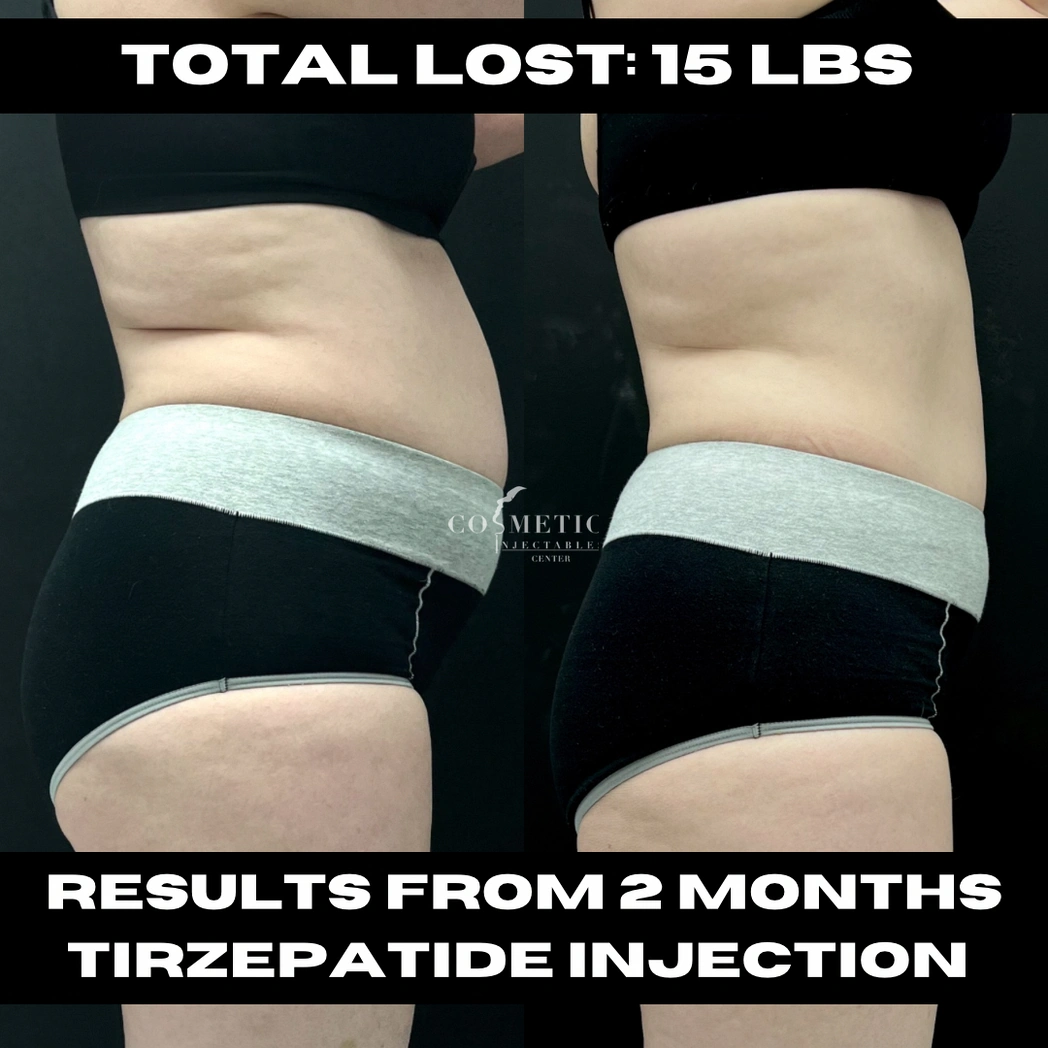
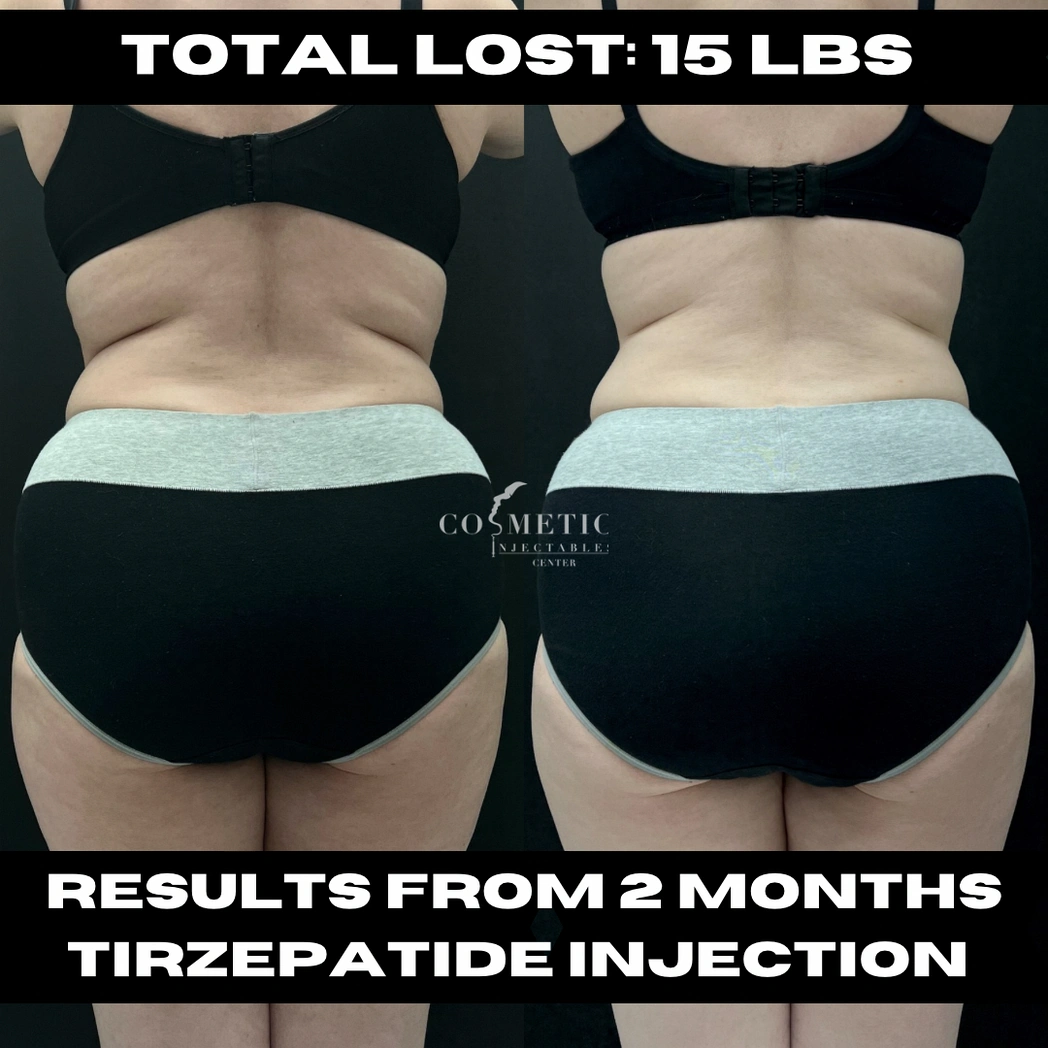
Before and After Gallery
Photographs of actual patients of Cosmetic Injectables Center Medspa during physician-supervised medical weight management, published with written consent. Images are unretouched. Individual results vary and are not guaranteed; these photographs are not a prediction of any individual outcome.
How the Procedure Works
Some products in this class are supplied in fixed-dose pens; compounded preparations are supplied in a vial and drawn to the prescribed dose at each injection. The therapy dispensed at Cosmetic Injectables Center Medspa is a compounded preparation, so the dose is measured at the time of injection. We recommend early doses are given in-office by a trained provider, so measurement, technique, and tolerance can all be checked.
Before & Preparation
You will have a consultation session with our experts where they will:
- Evaluate your general health
- Ensure you’re a good fit for treatment
- Help you set achievable goals
- Explain how the treatment works
- Point out the risks and possible side effects
- Order lab tests to review with our MD prior to start of medication


During the Procedure
Your dose is drawn from the vial and given as a small subcutaneous injection. Your provider will walk you through the process at your visit.
Generally, the guideline is as follows:
- We will draw the optimal dose based on your consultation
- The syringe is primed to remove any bubbles
- The injection site is determined- usually the abdomen
- Injection site is cleaned with alcohol
- A very fine needle is inserted just under the skin and withdrawn after the injection, which takes around five seconds.

Am I a Good Candidate for GLP-1 agonist?
GLP-1-based therapy may be appropriate for adults who:
- Are 18 years of age or older
- Have a BMI of 30 or higher, or
- Have a BMI of 27 or higher alongside a weight-related condition such as high blood pressure, high cholesterol, or type 2 diabetes
- Are willing to make and sustain nutrition and activity changes
- Are able to attend scheduled follow-up visits and laboratory monitoring
Eligibility is determined at consultation after review of your medical history and laboratory results.
GLP-1-based therapy is not appropriate if you have:
- A personal or family history of medullary thyroid carcinoma
- Multiple endocrine neoplasia syndrome type 2 (MEN 2)
- A known hypersensitivity to the medication or its excipients
- Type 1 diabetes mellitus
- A history of pancreatitis
- Current pregnancy, plans to conceive, or breastfeeding
Closer monitoring and individual assessment apply with gallbladder disease, significant kidney impairment, gastroparesis or severe gastrointestinal disease, and pre-existing diabetic retinopathy. These are reviewed individually at consultation.
Similar & Related Procedures
- Tirzepatide therapy: The GIP/GLP-1 dual-receptor agonist dispensed at Cosmetic Injectables Center Medspa, and the bookable service in this category.
- Medical Weight Loss program: The supervised structure around the medication laboratory review, nutritional guidance, dose planning, and scheduled follow-up.
- Phentermine: An oral appetite suppressant used short-term. Not a GLP-1 medication; use is generally limited to around 12 weeks.
Other diabetes medication classes, such as DPP-4 and SGLT-2 inhibitors, are prescribed in primary care and endocrinology rather than in a medical spa setting. They are not offered here.
GLP-1 agonist vs. GIP/GLP Dual Agonists
GLP-1 receptor agonists
Receptors targeted
Molecules
Administration
Primary uses
Common side effects
Offered at Cosmetic Injectables Center Medspa
GIP/GLP-1 dual agonists
Receptors targeted
Molecules
Administration
Primary uses
Common side effects
Offered at Cosmetic Injectables Center Medspa
Physician-guided GLP-1-based treatment at our Sherman Oaks medical spa supports appetite regulation, glucose balance, and sustainable long-term weight management.
GLP-1 Agonists Side Effects & Risks
Several medications in this class hold FDA approval for specific uses in specific patient groups. The tirzepatide dispensed at Cosmetic Injectables Center Medspa is a compounded medication prepared by a licensed pharmacy. Compounded medications are not approved by the FDA, which means the FDA has not reviewed them for safety, effectiveness or quality. Your Provider will discuss this with you during your consultation.
All medications in this class carry risks. The following side effects have been reported:
- Abdominal pain
- Diarrhea
- Nausea
- Vomiting
- Indigestion
- Constipation
- Bloating
- Headaches
In some rare cases, GLP-1 agonists can cause the following:
- Pancreatitis
- Hypersensitivity reaction
- Hypoglycemia
- Thyroid problems
- Renal problems
- Mood swings
- Gallbladder problems
- Changes in eyesight
Medications in this class carry a boxed warning regarding thyroid C-cell tumours observed in rodent studies, and are contraindicated in patients with a personal or family history of medullary thyroid carcinoma or Multiple Endocrine Neoplasia syndrome type 2 (MEN 2).

Why Choose Cosmetic Injectables Center Medspa for GLP-1 Agonist
GLP‑1 agonist therapy at Cosmetic Injectables Center Medspa is delivered within a physician-led medical spa in Sherman Oaks, where medication selection, dose escalation, and cardiometabolic risk factors are managed as part of structured medical care. GLP‑1 agonist therapy may be used to address medically supervised weight reduction, obesity-related comorbidities, and longer-term weight management in appropriately evaluated patients.
All GLP‑1 agonist treatments are overseen by Dr. Sherly Soleiman, MD, Founder and Medical Director of Cosmetic Injectables Center Medspa, who brings over 25 years of medical experience to clinical assessment, titration decisions, and ongoing monitoring. Under her leadership, the medical spa coordinates wellness-focused care with her background in cosmetic injectables, recognizing that significant weight change can affect facial structure, skin quality, and aesthetic planning within a single physician-directed setting.

Key reasons to consider Cosmetic Injectables Center Medspa for GLP‑1 agonist therapy include:
- Board-Certified Physician: GLP‑1 agonist therapy is supervised by a board-certified physician who reviews medical history, concurrent medications, and treatment goals within a true medical spa environment.
- 25+ Years of Medical Experience and Training: Dr. Soleiman applies decades of clinical decision-making to laboratory interpretation, side-effect management, and risk–benefit counseling for GLP‑1–based therapies.
- Founder & Medical Director Involvement: As Founder and Medical Director, Dr. Soleiman designs GLP‑1 agonist protocols, including eligibility criteria, dose-escalation schedules, and follow-up intervals, rather than relying on generic weight-loss program templates.
- Physician-Led, On-Site Care: GLP‑1 agonist therapy is provided in a physician-directed medspa where in-person assessments, dose adjustments, and supportive lifestyle recommendations are delivered by medically trained clinicians.
- Integration With Aesthetic Planning: Extensive experience in cosmetic injectables allows Dr. Soleiman to anticipate and address facial volume, contour, and skin changes associated with significant weight loss through separate, individualized aesthetic treatment planning when desired.
- Evidence-Led Protocols: Dosing schedules, monitoring intervals, and stopping rules follow current clinical evidence and published labelling for the molecule prescribed, prioritising medical appropriateness over trend-driven weight-loss offerings.
Patients seeking medically supervised GLP‑1 agonist therapy in Sherman Oaks, Santa Monica, Encino, and nearby communities can access physician-directed weight management within a medical spa that also understands the aesthetic implications of meaningful body change.
GLP-1 Agonist Reviews
”I can’t say enough amazing things about Melody and her incredible work at Cosmetic Injectables Center! I drive all the way from Pasadena to Sherman Oaks just to see her, and it’s worth every mile. She makes me feel so comfortable throughout the entire process, answering all my questions, explaining everything in detail and ensuring I have the best experience every time. I started my weight loss journey 4 months ago, setting goals, eating healthy, and exercising regularly. I highly recommend this place man or woman – it’s a game changer. The entire staff is amazing. Next appointment is already on the books! Thank you, Dr. Sherly Soleiman & Team”
M R.
Yelp
“The team here is absolutely fantastic! It’s always such a blast coming in for my tirzepatide injections and Brotox treatments with Melody. She makes the experience enjoyable and seamless every time. I highly recommend them!”
Andrew K.
For patients managing weight concerns or metabolic health, our Sherman Oaks medical spa provides physician-supervised GLP-1-based therapy. The medication we dispense in this category is tirzepatide.
GLP-1 Agonist FAQs
What are GLP-1 agonists and how do they work?
GLP-1 agonists are medications that mimic a gut hormone. They stimulate insulin release, reduce gluconeogenesis, slow down digestion, and give a feeling of satiety.
What is an example of a GLP-1 agonist?
The class includes semaglutide, liraglutide, exenatide, and dulaglutide, all of which act on the GLP-1 receptor. Tirzepatide is closely related and acts on both the GIP and GLP-1 receptors. Most are given as injections, weekly or daily depending on the molecule; one oral option exists. Tirzepatide is the therapy dispensed at Cosmetic Injectables Center Medspa.
Is metformin a GLP-1 drug?
No it is not. While this anti-diabetic medication has been shown to increase the release of GLP-1, it does so indirectly and not by direct impact on the intestinal cells.
What is the most common side effect of GLP-1 agonist?
The commonest side effects of GLP-1 agonists include nausea, abdominal pain, constipation, diarrhea, and vomiting.

Botox for Twitching & Spasms in Sherman Oaks, CA
Botox for Twitching and Spasms is a medical neuromodulator plan used to calm involuntary muscle movement in the eyelids or face. Our Providers treat Patients at our Medical...

BONT/E (TrenibotE) – Short-Acting Neuromodulator in Sherman Oaks, CA
BONT/E (also called TrenibotE) is a short-acting botulinum toxin type E neuromodulator in development by AbbVie/Allergan., the manufacturer behind BOTOX® Cosmetic. Designed as...

Evolysse Sherman Oaks, CA
Evolysse is a non-surgical facial treatment that lifts, tightens, and refreshes the skin in just one treatment session. The procedure smooths out wrinkles, plumps your skin...
Letybo Sherman Oaks, CA
Letybo is a safe and effective aesthetic procedure similar to Botox that helps to reduce the appearance of fine lines and wrinkles. The procedure works by temporarily relaxing...

VI Peel Sherman Oaks, CA
VI peel is a special chemical peel that treats skin texture, and reduces signs of aging, hyperpigmentation, and acne. It works by exfoliating the skin and stimulating collagen...
Tirzepatide Sherman Oaks, CA
Tirzepatide is a weekly injectable GIP/GLP-1 dual-receptor agonist used in medically supervised weight management and blood-sugar control. It acts on both appetite regulation...
At Cosmetic Injectables Center Medspa, GLP-1 treatments are personalized for comfort, safety, and a refined wellness experience grounded in medical expertise.