
Acne is rarely “just a breakout.” For many patients, the real long-term risk is persistent inflammation that drives scarring, post-acne discoloration, and uneven texture—problems that become harder (and more expensive) to correct later. In our Sherman Oaks medical spa, we approach acne as a medical decision: choosing treatments that calm active disease first, then methodically address pigment and scars without creating avoidable irritation.
At Cosmetic Injectables Center Medspa, care is directed by Dr. Sherly Soleiman, MD, Founder & Medical Director, a Board-Certified Physician with 25+ years of medical experience and training. She provides on-site, physician-led oversight across the full scope of medical spa treatments—setting protocols, supervising clinical standards and provider training, and maintaining sterility and complication-management readiness for all procedures performed within our Sherman Oaks practice.
Start with the right diagnosis (because “acne” isn’t one condition)
Before selecting a medical spa treatment, we clarify what we’re actually treating:
- Comedonal acne (blackheads/whiteheads): responds well to comedolytic routines, extractions, and targeted exfoliation.
- Inflammatory acne (red bumps/pustules): needs inflammation control; overly aggressive exfoliation often worsens it.
- Hormonal-pattern acne (often jawline/chin): topical care alone may underperform; many patients need medical coordination.
- Acne mechanica (from masks, helmets, workouts): friction and occlusion management is essential.
- Folliculitis (bacterial or yeast-driven): can mimic acne but requires different treatment.
- Scars and post-acne marks: a separate treatment plan entirely, best started once acne is stable.
What patients often miss: treating scars while acne is still active usually backfires. The sequence matters.
What a physician-led medical spa can do well for acne
A medical spa can be an excellent setting for acne care when the plan is realistic and medically supervised—particularly for patients who want:
- Fewer active breakouts through controlled exfoliation and pore management
- Reduced congestion (blackheads/whiteheads) with professional extractions
- Less redness and post-acne discoloration using the right light/laser strategy
- Smoother texture and scar improvement via microneedling-based remodeling (once acne is controlled)
Where a medical spa should not “replace” medical dermatology: severe cystic acne, acne requiring oral prescriptions (including isotretinoin), or acne with systemic/hormonal drivers still benefits from medical coordination. A good practice will tell you that upfront.
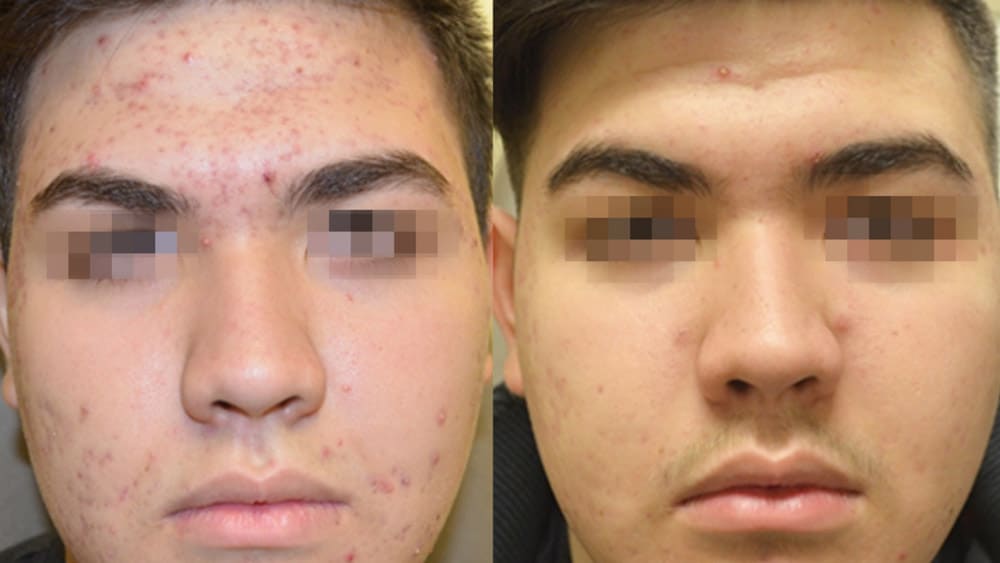
Treatment option 1: Medical-grade skincare + professional acne facials/extractions
This is often the highest-value starting point—especially for comedonal acne and patients who are irritated from trying too many products.
Works best when:
- breakouts are mild to moderate
- congestion/blackheads are the main issue
- you need a reset of barrier function and routine
Underperforms when:
- acne is deep, cystic, or widespread
- you have significant hormonal pattern acne without medical management
- there’s ongoing picking/skin trauma (behavioral drivers must be addressed too)
Clinical judgment: Extractions can be helpful, but aggressive or poorly performed extractions are a common cause of broken capillaries, prolonged redness, and post-inflammatory hyperpigmentation (PIH)—particularly in pigment-prone skin.
Treatment option 2: Chemical peels for acne and clogged pores
Chemical peels can be highly effective when used conservatively and selected for your skin type and acne pattern. In acne care, the goal is typically pore clearing + inflammation reduction, not “peeling hard.”
You may see peel plans that include salicylic acid (BHA), glycolic acid (AHA), Jessner-type blends, or other physician-directed options (depth and formulation matter more than the name).
Clinical judgment that matters
We avoid turning peels into a “stronger is better” contest. Over-peeling can inflame acne, disrupt the barrier, and trigger PIH, particularly in patients who tan easily or have melasma tendencies.
Poor candidate examples:
- actively sunburned or recently tanned skin
- patients with uncontrolled eczema/dermatitis
- patients who cannot follow strict post-care (especially sun protection)
- certain prescription timelines (e.g., recent isotretinoin) depending on treatment depth and physician assessment
If you’re exploring peel-based acne care, our approach typically pairs peels with a structured home routine and measured intervals (not random “as needed” treatments). For related resurfacing options, see our approach to Chemical Peels & Resurfacing.
Sherman Oaks–specific insight: Year-round UV exposure in Southern California is a major reason we stay conservative with peel depth and tighten post-care expectations—sun plus inflammation is the fastest path to stubborn discoloration.
Treatment option 3: Light and laser-based options (redness, discoloration, and some acne pathways)
Light and laser treatments can play a meaningful role, but patients deserve clarity: many devices help acne “side effects” (redness, PIH) more reliably than they eliminate acne itself. That distinction prevents disappointment.
What these treatments are often best for
- post-acne redness and vascular flushing
- post-acne brown marks (PIH) when treated with appropriate parameters for your skin type
- overall improvement in tone and “visibility” of prior acne activity
Depending on the device and your skin, options can include IPL-type photorejuvenation or other laser strategies. For example, we may discuss IPL Photorejuvenation or targeted approaches for discoloration such as Laser for Pigmentation.
Clinical judgment that matters
Energy-based devices are frequently overused in acne patients who are already inflamed. If your skin is reactive, the wrong settings—or the wrong timing—can worsen redness and pigment.
Poor candidate examples:
- recent sun exposure/tanning (higher pigment risk)
- uncontrolled melasma tendencies without a stabilizing plan
- patients expecting a laser to “replace” a complete acne regimen
Treatment option 4: Microneedling (and when it’s the wrong move)
Microneedling can be valuable for acne scars and texture, but it’s not a first-line treatment for active inflammatory acne.
Works best when:
- acne is mostly controlled and you’re treating lingering texture/scars
- you have rolling scars or early textural irregularity
- you can commit to a series and appropriate recovery care
We avoid it when:
- you have widespread inflamed acne (risk of additional irritation and prolonged redness)
- you have active infection or significant skin barrier disruption
- you have a strong history of keloids (needs careful physician evaluation)
For patients considering this category, see Microneedling as a starting point for how we frame candidacy and planning.
Treatment option 5: RF microneedling (e.g., Morpheus8) for scars, oiliness, and texture—used with restraint
RF microneedling can be an excellent tool for select acne-scar and texture patterns because it combines controlled needling with thermal remodeling. It is also higher stakes than standard microneedling.
Clinical positioning
RF microneedling fits best for patients with:
- acne scars with textural depth
- enlarged pores and early laxity contributing to “roughness”
- thicker skin types where controlled remodeling is appropriate
It underperforms (or risks complications) when:
- acne is actively inflamed and unstable
- pigment risk is high and settings are not selected carefully
- downtime expectations don’t match the treatment intensity
If this is on your radar, our framework is outlined here: Morpheus8.
Sherman Oaks–specific insight: Many local patients are outdoors year-round and want minimal visible downtime. That reality influences how we sequence RF microneedling—often stabilizing acne and pigment first so we can use safer parameters and avoid prolonged post-procedure redness or PIH.
Treatment option 6: Targeted medical interventions (for select cases, physician-directed)
Some acne scenarios call for medical judgment in the moment, not another facial. Examples can include:
- a single deep, painful lesion that may benefit from a physician-directed intervention
- protocols to reduce inflammation quickly before an important event (while still avoiding risky shortcuts)
Important: These are not “routine spa services.” They require physician governance, careful dosing/technique when relevant, and complication awareness (e.g., avoiding atrophy or pigment change). Not every patient is a candidate, and we do not treat these as cosmetic conveniences.
The most important part: how we sequence acne care (what happens first, second, third)
Patients get better results when acne care follows a clear order:
- Stabilize active acne + repair the barrier
This may include simplified home care, controlled exfoliation, and targeted in-office support.
- Control inflammation triggers
Friction, occlusion, picking, comedogenic products, and inconsistent routines sabotage progress.
- Treat discoloration (red/brown marks)
This is where light/laser and carefully selected peels can be high-impact.
- Treat scars and texture
Microneedling/RF microneedling belongs here—after acne is largely quiet.
This sequencing prevents the common failure mode: doing “scar treatments” while the skin is still actively breaking out.
What patients should ask any medical spa before starting acne treatments
Use these questions to protect your skin (and your investment):
- Who is the on-site medical director, and how are protocols set?
- How do you determine whether this is acne vs folliculitis vs rosacea?
- What is your plan if I flare or pigment after treatment?
- How do you adjust treatments for my skin type and pigment risk?
- What home regimen is required, and what products should I stop?
- What is the timeline—and what would be considered “not responding”?
A high-quality practice will welcome these questions and answer them concretely.
Common reasons acne treatment at a medical spa fails (and how we avoid them)
- Doing too much, too soon: stacking peels, devices, and active products creates chronic irritation.
- Ignoring pigment risk: PIH prevention is part of acne care, not an afterthought.
- No home plan: in-office treatments without disciplined home care are inconsistent by design.
- Treating scars before acne is controlled: leads to cycles of inflammation and setbacks.
- Chasing a single “best” device: acne is multifactorial; results come from selection and sequencing.
FAQs (practical, decision-focused)
Can a medical spa “cure” acne?
How many treatments will I need?
Are chemical peels safe for darker skin tones?
Should I stop my retinoid before a peel or laser?
Is microneedling okay if I still get pimples?
What about acne marks that won’t fade?
Acne outcomes improve when treatment decisions are made in person, with a full assessment and physician-directed planning at Cosmetic Injectables Center Medspa in Sherman Oaks. Care plans are individualized following an in-office consultation at our Sherman Oaks location.